Friday, October 24, 2008

ENTRE GOBIERNO INDÍGENA Y GOBIERNO NACIONAL, DIALOGO ESTE DOMINGO EN CALI

From the National Indigenous Organization of Colombia, ONIC

A pesar de la reiterada posición del Presidente Álvaro Uribe de no dialogar mientras no se levantara la movilización de los Pueblos, y no ceder a lo que él llama presiones, este domingo se sentaran frente a frente las Autoridades Indígenas con el Mandatario Nacional en la ciudad de Calí. De gobierno a gobierno.

“Porque las Autoridades Indígenas no le dan la espalda a su pueblo, que es el que manda”, en comunicado público le ratificaron al presidente que la cita no era Popayán sino Cali.

Frente a la posición autónoma de las Autoridades Indígenas, el Mandatario Nacional, comunicó esta tarde vía telefónica a la dirigencia de la Minga Nacional de Resistencia Indígena y Popular, que acepta sentarse a dialogar este domingo en la capital de Valle del Cauca.

Ante lo cual, el gobierno indígena confirmó que desde esta noche preparan la metodología y definirán el punto de encuentro en Cali este domingo; así lo ratificó el Consejero Mayor de la ONIC, Luis Evelis Andrade.

Cabe destacar que se mantiene el debate alrededor de los cinco puntos de la agenda en la Minga Nacional de Resistencia Indígena y Popular:

- Derecho a la vida, derechos humanos y resarcimiento del buen nombre de los Pueblos Indígenas.
- Cese de la agresión y ocupación territorial.
- Adopción de la declaración de la ONU sobre pueblos indígenas.
- Legislación del despojo que coloca en riesgo la pervivencia de los pueblos.
- Cumplimiento de acuerdos incumplidos con organizaciones y movilizaciones sociales.

Mientras tanto, siguen caminando la palabra desde Villa Rica en el departamento del Cauca y desde la glorieta la Cabaza en el departamento del Valle del Cauca, rumbo a Cali.

Siga los acontecimientos en la radio virtual Dachi Bedea
http://www.onic.org.co/dachibedea_radio.shtml


Contacto nacional: 315-8572995 Consejero Mayor ONIC, Luis E. Andrade y Aída Quilcue, Consejera Mayor del CRIC, 310-7871382.

ComunicaONIC (312-6394123)

Thursday, October 23, 2008

Who is Behind Today’s Six Bomb Blasts in Bogotá?

As Indigenous Protesters Camp in the Darkness of Villarica, Cauca - on Their Way to Cali for Monday’s Popular Minga - Fear of Real “Dark Forces” Lingers Overhead

By Mario A. Murillo (Bogotá, Colombia; October 23, 2008)

“The explosion of six small bombs in different points of the north and west of the Colombian capital of Bogotá marked…a chaotic day with a total of 16 people wounded, none seriously. The most important thing to keep in mind in the face of this wave of terrorism is the need to stay calm, not to exaggerate these incidents, nor contribute to the state of collective fear by creating alarmist interpretations or irrational theories.”

So begins Friday’s front-page editorial, posted Thursday night on the website of Colombia’s paper of record, El Tiempo.

Despite the editorial’s words of reasoned caution, I cannot help but try to interpret what these coordinated actions of small-scale attacks actually represent, given the current context of what went on in the rest of the city and throughout the country on this same day.

Indeed, these are extraordinary times in Colombia:

• The Indigenous and Popular Mobilization, or Minga, spearheaded by the Nasa communities of northern Cauca, but joined by the entire national indigenous movement throughout the country, continued in its long, deliberate march towards Colombia’s third largest city, Cali, reaching the municipality of Villarica after three days on the move, as thousands of women, peasants, and non-indigenous workers accompanied them along the way;

• The Central Workers Union, CUT, organized and held a successful general strike involving educators, health care providers, and a broad cross section of other public sector workers, who marched into downtown Bogotá and into other cities to protest salaries that have not kept up with inflation, among other issues;

• The predominantly Afro-Colombian cane cutters continued to maintain their disciplined work stoppage in the massive sugar plantations throughout the southwest of the country, marking 39 days of resistance to working conditions that at best can be described as indentured servitude, this despite consistent accusations from the government of being “manipulated by dark forces,” and the arrest of six of its primary leaders earlier in the week;

• On Wednesday night, the same night that President Alvaro Uribe finally admitted that government forces had fired weapons at indigenous protesters in last week’s mobilizations in the municipality of Piendamó, (something he was forced to do once CNN presented videotape footage of the incident on international television), the owners of some of the biggest plantations called on the government to declare a “state of commotion” on the striking workers, which would have given the public security forces the green light to forcibly remove the cane cutters from their makeshift encampments blocking the entrances to the plantations, a show of force against the constitutionally-protected, non-violent, civil disobedience being carried out by these workers now for over a month.

• The director of the Department of Administrative Security, DAS, the government’s internal security agency, was forced to resign after it was revealed that agents within her department were illegally monitoring the movements of leading opposition figure and potential presidential candidate Gustavo Petro of the Alternative Democratic Pole, PDA. These revelations came just days before partisans were going to vote on the Party’s slate for the upcoming PDA Congress.
If we weren’t in a Colombia governed by President Uribe, it would not be an exaggeration to say that Thursday marked the start of what, for all intents and purposes, could be described as a popular uprising against a very unpopular government.

But why the six bombs in Bogotá?

The editorial writer for El Tiempo, (which just so happens to be owned by the Vice President’s family) tells us we should not come to any preconceived conclusions that ultimately play into the hands of terrorists by “planting uncertainty in the people,” thereby destroying “the confidence the country has recuperated in its institutions.”

It is ironic that this so-called “confidence” in the country’s institutions comes amidst the troubling revelations at the DAS, the mass indigenous mobilizations in the south, and the ongoing Para-política scandal surrounding close allies of the president, a scandal that, for various reasons, seems to have been put on hold for the time being as the media focus on other unfolding crises. Less than a week ago, Human Rights Watch put out a report that documented how the Uribe administration was directly interfering with the ongoing investigations of various Uribe supporters linked to right wing paramilitary groups, making it almost impossible for investigators to get to the bottom of the situation.

All of this points to an accelerated crumbling of public confidence, despite the constant drumbeat of the corporate media, reminding us of the unprecedented popularity of Mr. Uribe. Can those numbers be for real, given the objective reality surrounding the country today?

But what does this have to do with six bombs going off in Bogotá on the same day so many other things were seemingly going wrong?

While no one has claimed responsibility for the bombings, El Tiempo assures us that “all of us know where these bombers come from and what their objectives are,” ironically just one paragraph after urging the reader not to jump to any hasty conclusions.

“A guerilla that, after 40 years of armed struggle, finds itself at its highest level of unpopularity and isolation might think that placing bombs in public spaces is one way to have a presence, and debunk interpretations that point to its growing weakness,” reads the editorial.

This is the conventional wisdom repeated again and again by Colombian military officials and echoed regularly in the media. The guerillas are on permanent retreat, so they have now moved on to acts of utter desperation. In fact, today we heard reports that Alfonso Cano, the commander of FARC, had been wounded in the hand during recent combat, and that the top leadership is, for all intents and purposes, completely surrounded.

To its credit, the editorial I keep referring to rightfully pointed out that FARC has always rejected the idea of using urban terrorism as an expression of its political survival in its texts and speeches. However, it goes on to state unequivocally that “everything indicates that today” things are different.

So, if these mindless, seemingly well-coordinated, yet small-scale bomb attacks are proven to be the work of FARC, how should we perceive it within the current state of affairs? Well, once again, the profound bankruptcy of the guerillas’ reactionary ideals will be placed under the national and international spotlight, the relentless peddling of random violence as some revolutionary moment. This would be most unfortunate, precisely because these acts are being carried out at the same time that millions of other working Colombians are struggling to have their voices heard, mobilizing under the most difficult conditions to truly transform a nation that is currently being led by a highly entrenched, yet what many perceive to be an illegitimate regime. The popular and indigenous movements’ righteous demands are inevitably and tragically overshadowed by the “public fear” that is automatically thrust to the forefront of the news agenda.

Whose interests, in this scenario, are actually being served?

But what if these six bombs are not the work of FARC?

As the El Tiempo editorial correctly argues, “to synchronize these acts to the day that there is a peaceful national strike and when there are social marches unfolding in the rest of the country provides ammunition for those who look to criminalize social protest.”
And who, exactly, are they referring to here? From my standpoint, this is the most alarming aspect of today’s events, and should send shivers down the spine of anybody who has been paying close attention to developments in Colombia over the past several years.
Let’s take a quick step back over the last few months:

The sugar cane workers go on strike, demanding better working conditions…and they’re accused by President Uribe of being manipulated by “dark forces.”

The indigenous movement mobilizes to demand a dialogue with the government…and they are accused by President Uribe of being infiltrated by “terrorists.”

Independent journalists put out incriminating reports about possible corruption in the presidential re-election process of 2006…and they are accused by President Uribe of being treasonous.

And the state judicial workers go on strike for over a month, and the president declares a state of internal commotion, automatically assuming extraordinary powers relating to justice and security. Despite the judicial union’s announcement last week of the suspension of their strike, President Uribe has not rescinded the state of internal commotion. Many observers are asking why?

Do we sense a pattern here?

I just spoke by telephone to one of the organizers of the Minga Popular, who was sitting in the encampment in Villarica, Cauca, where the thousands of protesters have chosen to stop for the night until they resume their long trek towards Jamundí on Friday morning, hoping to arrive in Cali by the weekend. He tells me the movement remains united, despite reports that some indigenous leaders in Cauca’s capital, Popayán, had agreed to meet with President Uribe in one of his highly stage-managed communal councils over the weekend.

“This is false,” he said. “The people camped out in Villarica are committed to holding their massive popular assembly in Cali on Monday, hoping the president will agree to meet with them there, on their terms.”

He then told me that the lights in the encampment have been mysteriously shut off.

The mood amongst the indigenous people gathered remains very positive and focused, he assured me, although there is an ominous feeling hovering above just about everybody there.

Today’s events were in many ways unprecedented, but at the same time overwhelming for them.

They don’t want to jump to any conclusions about what might be behind these six explosions.

But some of them fear for the worst.
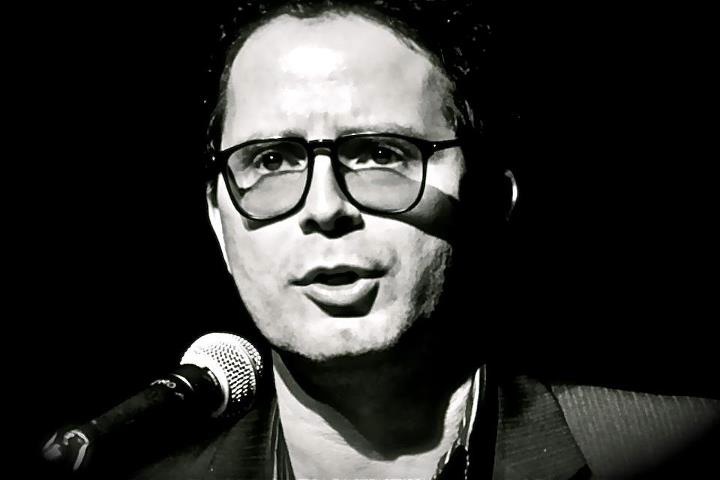
Rafael Coicué on CNN en Español

Rafael Coicué, long-time activist and survivor of the 1991 Nilo massacre, where 20 Nasa indians were gunned down by paramilitaries working in collaboration with the National Police and local landowners in Northern Cauca, is currently in Washington, DC, where he will be testifying before the Inter-American Commission on Human Rights of the OAS. His brother was killed in the 1991 massacre. Coicué himself was shot by special forces police in his native Corinto in July 2008, losing an eye in the process. He was on CNN in Español on Wednesday.

He will be speaking in several events from Friday to Sunday, October 24-26th, in New York City. For more details about these events, check out the website of First Voices Indigenous Radio, which has been covering the developments in Cauca for the last several weeks.

Report on Cauca on Democracy Now

Indigenous Colombians Begin 10,000-Strong March Against Uribe Government

TEXT From Democracy Now Website:

More than 10,000 indigenous Colombians have begun a protest march against President Alvaro Uribe. Marchers are protesting the militarization of their territories, the US-Colombia Free Trade Agreement, and the failure of Uribe’s administration to fulfill various accords with the indigenous communities. We speak to Rafael Coicué, an indigenous leader who lost sight in his left eye when he was assaulted by masked gunmen in his home, and Mario Murillo, a US journalist and professor currently in Colombia.

On Thursday, October 23, Democracy Now had this brief report about the situation in Cauca and the rest of the country.

Wednesday, October 22, 2008

Indigenous and Popular March Towards Cali Continues

As the mass popular mobilization in Cauca and the rest of Colombia continues, the government of Alvaro Uribe finally addressed the five point agenda of the Popular and Indigenous Minga, a small step forward after over a week of intense military confrontations with the protesters. Yesterday, just before indigenous and peasant communities were about to begin their long march towards the city of Cali, the Minister of Agriculture, Andrés Felipe Arias, finally recognized the points in the name of the national government, albeit in a superficial and roundabout way.

This initial recognition of the five points has been superceded today, Wednesday, as the Minister of Defense, Juan Manuel Santos, continued to point out that the indigenous protesters were the violent ones who were “firing on Colombian special police forces” during last week's confrontations on the Pan American highway.

While on the one hand, the government claims it is willing to resolve this problem, arguing that it will "buy some lands" in order to keep the people quiet, they continue with their harsh accusations and unconciliatory tone, consistent with the last six years of the Uribe Administration.

So as the popular march moves forward – with people from all over the south converging on Santander de Quilichao today - bringing together indigenous and peasants with sugar cane workers and Afro-Colombian communities who will march for the next several days towards Cali, it is important to keep in mind the very important message the Popular Minga is putting forward to the entire nation.

In a sense, it’s a very detailed response to the many distortions that continue to make their way through the corporate media filters about what it actually is that the communities are calling for.


FROM ACIN, Association of Indigenous Councils of Northern Cauca

1. It’s clear that our struggle…includes the issue of lands, which is transcendental for indigenous people. But we reiterate so that it remains totally clear, that we are not only demanding that the government comply with agreements and resolve the necessities and rights relating solely to the issue of lands; the issue of land is not a problem exclusive to the indigenous people, nor is it something that relates only to the department of Cauca. We will continue to present our profound ideas and proposals relating to this issue, based on abundant experience, evidence, and documentation that exists, such that we will expose the superficial pronouncements that the government keeps making about this issue, including from the President himself. In essence what we are demanding is that the government comply with agreements already made, which public opinion should be made aware of. Given that accords and conventions already exist, we are not looking to negotiate anything new at the current moment, but that the government complies with what has already been agreed upon.


2. Regarding the issue of the Free Trade Agreements: First of all, we reiterate with total clarity that yes, this issue is a fundamental component of our agenda of mobilization, and that it must be addressed. We remind the national government that the FTA with the United States has already gone through its legislative cycles in Colombia and has been approved by the National Congress. Although we have serious concerns about the entire process of negotiation of the accord, of the lack of consultation and the manner in which it was approved, at the moment, the U.S.-Colombia FTA is in the hands of the United States Congress. Recognizing this reality, we propose that mechanisms of interlocution with the U.S. Congress be established. It makes no sense to debate the issue with the Colombian government. Our reasons for rejecting this and other similar treaties have been expressed broadly and repeatedly. We also must remember that we organized and held transparent, internationally verified, and democratic consultations on the FTA in the past, where 98% of the voters in Cauca gave an overwhelming “NO” to the FTA.

3. Regarding the issue of what we call the “Laws of Dispossesion,” we point to Law 1152 or the so-called Rural Statute, as a perfect example. We embrace as a precedent the ruling made by the Honorable Constitutional Court (Sentence C-030 of 2008) that declared as unconstitutional the Forestry Law (the court ruled that the measure was approved by Congress without the prior consultation of indigenous communities, as protected by the Colombian Constitution). With this in mind, we demand that the Rural Statute, the Mining Code of 2007, the Plans for Water Privatization, and all the other laws that should be brought before the people under the provisions of Prior Consultation, be reconsidered, according to Treaty 169 of the International Labor Organization, represented in Law 21 of 1991, and protected in the Colombian Constitution. Based on this demand, we call on the immediate nullification of all these laws (starting with the Rural Statute) and the presentation before the Congress of new bills that will replace them, which will be based on the consideration of results and contents emerging from an appropriate, democratic process of prior consultation with the communities.


4. With regards to the “Democratic Security” policy of the government, we repudiate the ongoing assassinations of indigenous people, on average more than 100 per year during the six years of the presidency of Dr. Alvaro Uribe Vélez, 17 of which were carried out between the 17th of September, 2008, and today, October 21. Eight of these assassinations were carried out by the public security forces, one by the guerillas, four by paramilitaries and the other four victims by unknown actors. The National Indigenous Organization of Colombia, ONIC, has been putting together a comprehensive report of the serious and systematic violations of human rights carried out against indigenous people, yet there has been no serious or effective commitment on the part of the government to put a stop to this dirty war, to carry out thorough investigations into these crimes, so that they don’t remain in absolute impunity, and that guarantees can be established to protect the life and the security of individuals and collectives, in coordination with the indigenous authorities and the people. The record of the National Government vis a vis indigenous people is shameful.

The diagnosis and recommendations made by the United Nations Special Rapporteur for Indigenous Peoples continue to be valid. There is evidence of a deterioration of conditions that point to an ethnocide and genocide, in some cases leading to the extinction of various peoples. To this we add the criminal and war-like treatment of our current mobilization, something that warrants an investigation resulting in documentation that will lead to the truth, justice and integral reparations for indigenous people. At the moment, as a consequence of the false accusations that the government and the public security forces have made against us, calling us terrorists manipulated by FARC, we have been indirectly drawn into the internal armed conflict, and in turn, everybody involved in the Popular Mobilization of the last few days is under imminent risk of attacks against our integrity, and individual security.

We hold the government responsible for having created this situation of risk and imminent threat against our people. The state, which has the duty to protect us, actually threatens us. As a consequence, we find it necessary that there be an immediate presence such as an international commission allowed into the territories, in order to assume concrete functions that could result in a response to this grave situation.

During the current mobilization, and throughout his mandate, President Uribe and his government have taken on an extremely alarming attitude towards indigenous people, insisting on negating our specific rights, which he should recognize and guarantee us given his constitutional mandate as head of state. He insists on presenting these rights as undeserved or abused privileges, with the objective of generating resentment against us, and promoting conflict with other social sectors. We are calling attention to these attitudes and these dangerous policies, which continue to generate discrimination and promote prejudice.

The President and his minister of Agriculture manipulate statistics and interpret some of our actions in distorted ways in order to get the rest of the Colombian population to believe that we receive unwarranted privileges, or worse yet, that we are responsible for the problems and difficulties they as different sectors face. These manipulations are false and are not based on reality. Poverty and social injustice affect us all, and they are the responsibility of deliberate state policies that victimize us all.

We reaffirm our commitment to the well being of all peoples, with equality and social justice, and we do so as ancestral and ancient peoples. Therefore, we demand that the government stop deliberately confusing the guarantee of collective rights, social justice and equality, obligations permanently delayed or negated by the state, with the right to differences and the respect for diversity.

As Indigenous peoples, we demand that the United Nations Declaration on the Rights of Indigenous People be ratified by the Colombian State as a law of the Republic. At the same time, we support the specific rights of other peoples and social sectors, always within the frame of social justice and equality. What for us is abhorrent and should disappear immediately is the high concentration of land and wealth, and the laws that guarantee benefits and privileges to political bosses, wealthy landowners, the upper classes and transnational corporations at the expense of poverty and exploitation of the majority.

Once our full agenda is recognized, the much-delayed process of resolving our many differences in a serious and integral way will finally begin. This will mean profound transformations, not only for indigenous people, but for all social sectors and the entire country. This requires understanding this reality in a very serious and mature fashion. To continue to postpone these transformations is irresponsible, and will send the country in a direction that up to now only benefits a few interests, and in the short term is unsustainable, even for those same interests. To transform Colombian institutionality in order to benefit all of society is necessary, possible and inevitable.

The irresponsible management of these important issues by both the government and the commercial mass media, requires a highly conscientious mobilization of a broad cross section of sectors, and the consolidation and development of a practical national agenda to advance towards the country that is possible and necessary. This popular Minga proposes to establish a solid path of the people, to march together in unity, through diverse voices and mutual respect, sharing the pain of one another as we walk towards life and liberty.

Asociación de Cabildos Indígenas del Norte del Cauca-ACIN ACIN – Cxab Wala Kiwe Santander de Quilichao, Octubre 20 de 2008.

Tuesday, October 21, 2008

Government Addresses Indigenous Movement's Five Main Points - Popular March to Cali Begins Today in Cauca

As mobilization in Cauca and the rest of Colombia continues, the government of Alvaro Uribe finally addressed the five point agenda of the Popular and Indigenous Minga, a small step forward after over a week of intense military confrontations with the protesters. The ACIN put out a response to the government's points, as they were getting ready to begin the long march to Cali over the next several days. Here is the Spanish version. I will send a synthesis in English in the coming hours. Also be sure to check out the report from the International Federation of Human Rights, (FIDH) which was distributed earlier by the Colombian human rights NGO Colectivo de Abogados (I just posted it on my blog).

Así vamos trabajando la agenda

10/20/2008
Autor: ACIN

El Gobierno Colombiano menciona la existencia de la agenda de movilización de los pueblos. En este texto, avanzamos con un análisis serio de lo que esta implica y propone y lo sometemos a la consideración d ela opinión pública.

En la edición matinal del Noticiero de Caracol Televisión, el Ministro de Agricultura Andrés Felipe Arias finalmente reconoce a nombre del Gobierno Nacional, los cinco temas de la agenda de la Minga de los Pueblos. Aunque la presenta de manera displicente y distorsionada, este es un avance significativo frente a la actitud y declaraciones de los últimos días. Respondemos a este hecho avanzando con unas explicaciones y claridades para que la opinión pública comprenda lo que estamos proponiendo.

En estas líneas hacemos una lectura exclusivamente desde los pueblos indígenas, para ilustrar el análisis de la temática, entendiendo que aplican con especificidades a otros asuntos, pueblos, sectores y procesos.
1. Es claro que nuestra lucha, en el aspecto reivindicativo, incluye el tema de tierras que es trascendental para los pueblos indígenas. Pero lo reiteramos para que quede claro, no exigimos que se cumplan convenios y se resuelvan necesidades y derechos solamente en el tema tierras; el tema tierras no es un problema exclusivo de los pueblos indígenas ni se trata de una exigencia solamente para el Cauca. Sobre este tema seguiremos profundizando nuestras propuestas desde la abundante experiencia, evidencia y documentación que existe de modo que superemos los planteamientos superficiales que viene haciendo el Gobierno desde el propio Presidente. En esencia se trata de que el Gobierno cumpla con compromisos adquiridos que debe conocer la opinión pública. Dado que ya existen acuerdos y convenios, no buscamos negociar nada nuevo por el momento, sino que se de cumplimiento a lo convenido.

2. Frente al tema de los Tratados de Libre Comercio. En primer lugar reiteramos con toda claridad que sí es un tema trascendental de nuestra agenda de movilización y que debe ser abordado. Le recordamos al Gobierno Nacional que el TLC con los Estados Unidos ya cumplió su trámite en Colombia y ha sido aprobado por el Congreso de Colombia. Aunque tenemos reparos serios frente a todo el proceso de negociación, al carácter inconsulto del mismo y al trámite de aprobación, en este momento el TLC está en manos del Congreso de los Estados Unidos. Reconociendo esta realidad, proponemos mecanismos de interlocución frente al Congreso de los Estados Unidos. No tiene ninguna utilidad debatir el tema con el Gobierno de Colombia. Los motivos para rechazar este tratado y otros similares han sido planteados ampliamente y los reiteramos. Recordamos además que realizamos consultas populares transparentes, internacionalmente verificadas y democráticas en las que el 98% de los votantes dieron un rotundo NO al TLC.

3. El tema que hemos denominado “Legislación de Despojo” es ejemplificado por el Estatuto Rural o Ley 1152 de 2007. Tomamos como precedente la Sentencia C-030 de 2008 de la Honorable Corte Constitucional que declaró inexequible la Ley Forestal1 . En ese sentido exigimos que el Estatuto Rural, el código de Minas, los Planes de Aguas y todas las leyes que han debido ser sometidas a consulta previa según lo ordena el Acuerdo 169 de la OIT, Ley 21 de 19912 . Frente a esta demanda, exigimos que se deroguen de inmediato estas leyes (empezando por el Estatuto Rural) y se sometan proyectos de Ley al Congreso, que las sustituyan y que contemplen claramente los resultados y contenidos de un proceso apropiado y democrático de consulta previa.

4. En cuanto al tema de “Seguridad Democrática”, terror y guerra, repudiamos el repetitivo asesinato de indígenas, en promedio más de 100 por año durante los 6 años de presidencia del doctor Álvaro Uribe Vélez, 17 crímenes de los cuales han sido cometidos entre el 17 de septiembre de 2008 y el día de hoy, ocho (de ellos por la fuerza pública, uno (1) por la guerrilla, cuatro (4) por los paramilitares y dos (2) por autores aun no conocidos. La ONIC ha estado elaborando reportes sobre violaciones de derechos humanos de manera seria y sistemática, sin que se haya logrado un compromiso serio y eficaz por parte del Gobierno Nacional para que se detenga la guerra sucia y el terror contra los indígenas, se investiguen los hechos y no queden en la más absoluta impunidad y se establezcan garantías para la vida y seguridad de personas y colectivos en coordinación con los pueblos y autoridades indígenas. El record del Gobierno Nacional frente a los pueblos indígenas es vergonzoso. El diagnóstico y las recomendaciones hechas por el Relator Especial para los Pueblos Indígenas de Naciones Unidas, sigue siendo válido. Hay evidencia de un franco deterioro que apunta hacia el etnocidio y genocidio e inclusive la extinción de varios pueblos. A esto se suma el tratamiento criminal y de guerra que se le dio a la presente movilización, lo que amerita una investigación y documentación que conduzca a procesos de verdad, justicia y reparación integral a la vez que a la protección real de los pueblos indígenas en tanto pueblos y culturas y sujetos de derechos. En este momento, como consecuencia de los señalamientos fabricados y falsos que nos ha hecho el Gobierno y la fuerza pública como terroristas y manipulados por las FARC, nos ha involucrado directamente en el conflicto armado y en razón de esto, ha provocado un riesgo inminente de ataques contra la integridad, bienestar y seguridad individual y colectiva de todos los que hemos tomado parte en la Minga de los Pueblos. Responsabilizamos al Gobierno Nacional de haber creado esta situación de riesgo y de inminente amenaza contra nuestros pueblos. El propio Estado que debe protegernos, nos amenaza. En consecuencia, se hace necesaria la intervención y presencia inmediata de una comisión internacional que pueda asumir funciones concretas para que se de respuesta real a esta gravísima situación. Comisión para la que solicitamos la presencia y coordinación de James Anaya, Relator Especial para los Pueblos Indígenas de las Naciones Unidas.

Durante la presente movilización, al igual que durante todo su mandato, el Presidente Uribe y su Gobierno, han asumido una actitud particularmente preocupante frente a los pueblos indígenas, insistiendo en negarnos los derechos específicos que debe reconocernos y garantizarnos por mandato constitucional y legal. Insiste en presentar estos derechos como privilegios inmerecidos o abusos, en el propósito de generar resentimiento y promover conflicto con otros sectores sociales. Llamamos la atención sobre esta actitud y políticas peligrosas y amenazantes, que van generando discriminación y promoviendo prejuicios.

El Presidente y el Ministro de Agricultura manipulan cifras e interpretan diversos hechos de manera distorsionada para que otros sectores y la ciudadanía en general perciban que recibimos privilegios inmerecidos o que, peor aún, somos culpables de sus problemas y dificultades. Esto es falso y no tiene sustento en la realidad. La pobreza y la injusticia social nos afectan y son responsabilidad de las políticas de Estado de las que somos víctimas.

Afirmamos nuestro compromiso con el bienestar de todos los pueblos, con la equidad y la justicia social y lo hacemos como pueblos ancestrales y originarios. En consecuencia, exigimos que el Gobierno cese en su empeño de confundir la garantía de derechos colectivos, justicia social y equidad, obligaciones permanentes postergadas y negadas desde el Estado, con el derecho a la diferencia y el respeto por la diversidad.

Como pueblos indígenas, exigimos que la Declaración de las Naciones Unidas sobre los Derechos de los Pueblos Indígenas sea ratificada por el Estado Colombiano como Ley de la República. De la misma manera, respaldamos los derechos específicos de los demás pueblos y sectores sociales, siempre dentro un marco de justicia social y equidad. Lo que es aberrante y debe desaparecer es la concentración de tierras y riquezas y la legislación que garantiza beneficios y privilegios a gamonales, terratenientes, estratos altos y transnacionales a costa de la pobreza y explotación de la mayoría.

Una vez que nuestra agenda sea reconocida, comienza un proceso ya postergado de manera excesiva e innecesaria para abordarla y resolverla de manera integral y seria. Ello impone transformaciones profundas, no solo frente a los pueblos indígenas, sino para todos los sectores y todo el país. Se requiere asumir esta realidad de la manera más seria y madura posible. Seguir postergando estas transformaciones es irresponsable y está sumiendo al país en una sin salida que hasta ahora beneficia algunos intereses particulares, pero que resulta insostenible en el corto plazo, aún para quienes han acumulado beneficios. Transformar la institucionalidad Colombiana para beneficio de toda la sociedad, es necesario, posible e inevitable.

El manejo irresponsable que le da el Gobierno y los medios comerciales de comunicación a estos temas, requiere de la movilización consciente de amplios sectores y de la consolidación y desarrollo práctico de una agenda nacional en Minga para avanzar hacia el país posible y necesario. Esta Minga se propone establecer un camino sólido desde los pueblos para construir y poner en marcha una agenda de unidad, desde la diversidad y el respeto, a partir de sentir y compartir el dolor para que se haga camino de vida y libertad.


Asociación de Cabildos Indígenas del Norte del Cauca-ACIN
ACIN – Cxab Wala Kiwe
Santander de Quilichao, Octubre 20 de 2008.


1. Dice la sentencia literalmente_AA_CoLoN_ “Para que se hubiese cumplido con el requisito de la consulta habría sido necesario, poner en conocimiento de las comunidades, por intermedio de instancias suficientemente representativas, el proyecto de ley; ilustrarlas sobre su alcance y sobre la manera como podría afectarlas y darles oportunidades efectivas para que se pronunciaran sobre el mismo. Ese proceso no se cumplió, razón por la cual la Corte concluye que, dado que la ley versa sobre una materia que se relaciona profundamente con la cosmovisión de esas comunidades y su relación con la tierra, y que, por acción o por omisión, es susceptible de afectarlas de manera directa y específica, no hay alternativa distinta a la de declarar la inexequibilidad de la ley.

2. Por todo lo anterior, la Corte declarará la inexequibilidad de la Ley 1021 de 2006 “Por la cual se expide la Ley General Forestal”.

Monday, October 20, 2008

An Historic Day for Indigenous Peoples

The following message was sent by the Association of Indigenous Councils of Northern Cauca, ACIN, on Sunday after

An Historic Day for Indigenous Peoples


"We don´t have a Government" was the conclusion reached by Feliciano Valencia, a native Nasa leader from CRIC during his speech at the press conference at La María Piendamó. In a deep, firm and measured tone, his words were heard in profound silence by an audience of about 5000 indigenous people and some representatives of the Colombian media.

Feliciano began the initial part of his speech by making a number of very strong points which began with "It is not true that....". Indigenous peoples are not terrorists, the mobilization (Minga) is not controlled or run in coordination with FARC, land is not the main nor the only issue, indigenous peoples have not negotiated, nor reached an agreement with the Colombian Government, contrary to what was falsely stated by the Ministers of Justice and the Interior, Agriculture and Social Welfare, Indigenous peoples did not attack the Colombian armed forces and were instead mercilessly and brutally attacked with live ammunition which have left 132 wounded, one dead and one dying, the Government has not fulfilled its obligations with indigenous peoples and has made no effort to keep its promises.

Feliciano then proceeded to describe the Government´s and media behaviour towards the mobilization.

"We invited the President to a dialogue and he responded with a military assault." Feliciano described the mediatic manipulations, the lies fabricated by the commander of the Police, President Uribe, the head of the Secret Service and several Ministers.

Beyond recent events, Mr. Valencia explained how indigenous peoples are being exterminated not only through a permanent dirty war, military offensives and crossfire, but also through policies of extermination, exploitation and exclusion that have become systematic under the current administration in order to deliver the country´s wealth to transnational corporate interests. This account lead to the indictment: "We don´t have a Government in Colombia".

Consequently, the Minga convenes the primary constituent assembly. The people of Colombia. All Colombians. Not to follow an indigenous agenda but to weave a collective agenda, a new country from our collective demands and pain.

Feliciano proceeded to outline the five point agenda:
1. No to the economic model and the FTA´s with the US, Canada and Europe;

2. A removal of the legislation that empoverishes peoples, destroys and denies rights and freedoms, delivers the wealth of the country to corporate interests and has not gone through consultation with those affected;

3. No more war and terror as the main Government policy.

4. Respect and application of international and national agreements and establishment of the conditions that will allow the people to construct a new, possible and necessary country.

5. A proposal not for indigenous peoples, but from them, to construct jointly a new society.

The authorities announced a march towards the city of Cali, which will leave from La María next Tuesday. Other social movements and organizations have announced that they will join and mobilize and the whole country is invited to mobilize and gather in Cali.

The words have been stated and now the talk will be walked until a new reality gets on the way, from a country with owners and no peoples, to a country of the peoples without owners.

Today, we heard one of the wisest and clearest statements in recent Colombian history. From being marginalized and defamed as terrorists, from being wounded and murdered like rats, from being lied about and abused, from being excluded, indigenous peoples have stood back and shown their wisdom and dignity taking on their leadership as masters of wisdom for the construction of a new world on this territory of Mother earth now known as Colombia.

The audio recording will be posted on www.nasaacin.org . Now, tired, saddenned by the wounded and dead who will lead the march, indigenous peoples are standing strong to convene the transformation of Colombia. A major struggle for which they request the solidarity and support of international observers.